What Happens If You Ignore Back Pain? What Usually Happens, What to Watch For and What Helps
Almost everyone does it. Your lower back starts aching after a long week, and you tell yourself it'll pass. You skip the stretch, keep sitting the same way, take the stairs a little more carefully — and wait. Sometimes it does pass. Sometimes, three weeks later, you realize you've been "waiting" for a month.
This article gives you the honest picture: what usually happens when everyday back pain is left alone, why it tends to linger, which symptoms you should never ignore, and the small daily habits that make the difference. It's general information, not medical advice, and it's written for ordinary muscular back pain, not injuries or diagnosed conditions.
First, the reassuring part
Back pain is one of the most common reasons adults see a doctor, and the large majority of everyday cases are muscular and mechanical: tired, tight or strained muscles and ligaments from sitting, lifting, sleeping awkwardly or doing more than usual. That kind of pain usually improves within days to a few weeks, even without special treatment.
So no — a stiff back after a weekend of yard work is not a ticking time bomb. The real question isn't "is it dangerous to ignore?" but "what does ignoring it cost me?" And the answer is usually time, sleep and comfort.
What tends to happen when you ignore it
1. The muscles stay "on guard"
When a part of your back hurts, the surrounding muscles tighten to protect it. That's useful for a day or two. But if nothing helps them relax — no movement, no warmth, no massage — the guarding can hang around, and the tightness itself becomes a source of pain. It's a loop: pain → tension → less blood flow and movement → more stiffness → more pain.
2. You start moving differently
Without noticing, you shift your weight, twist less, bend differently or walk a little stiffly. Those small compensations put extra work on other areas, which is why a lower-back problem that's been ignored for weeks often comes with sore hips, a tight upper back or a stiff neck.
3. Sleep gets worse — and poor sleep makes pain feel worse
Back pain makes it harder to find a comfortable position and easier to wake up. Short or broken sleep, in turn, tends to make the body more sensitive to pain the next day. Ignored pain and poor sleep feed each other. (If your back is worst in the morning, see why you wake up stiff and sore.)
4. You quietly do less
You skip the walk, avoid the gym, put off the yard, sit more. Less activity means weaker, stiffer muscles — which are more likely to ache the next time you do something physical. Bed rest and "babying" the back are among the most common reasons a simple flare-up drags on.
5. It comes back
Even when the pain fades, the trigger usually hasn't changed: same chair, same screen height, same way of lifting, same lack of movement. That's why so many people describe their back pain as something that "goes out" every few months.
6. It can become the background of your day
Pain that lasts longer than about three months is generally described as chronic (we explain this and other terms your doctor may use in our back pain glossary; for what the NIH actually recommends doing instead of waiting, see official guidance on low back pain). Not every ignored backache gets there, but the longer pain goes on, the more it tends to affect mood, energy, work and how much you enjoy moving. That's the real reason not to ignore it — not fear, but quality of life.
Ignoring it vs. over-resting vs. acting early
| Approach | What it looks like | What usually happens |
|---|---|---|
| Ignoring it | Same habits, push through, hope it passes | Often fades slowly, then returns with the same trigger |
| Over-resting | Days in bed or on the couch, avoiding movement | Muscles stiffen and weaken; recovery tends to be slower |
| Acting early | Gentle movement, warmth, a few minutes of massage, fixing the trigger | Usually the quickest route back to normal, and fewer repeat flare-ups |
"Acting early" doesn't mean booking appointments for every ache. For ordinary muscular pain it mostly means short walks, a warm shower, a stretch break every 30–45 minutes and a minute or two of massage over the sore area, once or twice a day. A drug-free gel like Kinzeno Gel makes that last step quick and pleasant, so it actually happens. For quick habits at work, see our desk-job back pain fixes.
The red flags you should never ignore
Everything above applies to everyday muscular pain. These are different — don't wait them out:
- Loss of bladder or bowel control, or numbness in the groin or inner thighs — go to urgent care or the ER the same day;
- sudden weakness in a leg or foot;
- back pain after a fall, accident or sports injury;
- back pain with fever, chills or unexplained weight loss;
- numbness or tingling spreading down a leg;
- pain that wakes you every night and doesn't ease when you change position;
- pain that is not clearly improving after a couple of weeks, or keeps getting worse.
Not sure which step fits your situation? Our if-then back pain guide maps the most common scenarios to what to try first at home and when to see a doctor.
Also check with your doctor before starting any home routine if you have osteoporosis, take blood thinners, are pregnant, have a history of cancer or have had spine surgery. Not sure who to see? Our guide to chiropractor, massage or physical therapy helps you choose.
What "not ignoring it" looks like in real life
You don't need a complicated plan. Most people do well with three habits:
- Keep moving, gently. Normal daily activity and short walks, minus heavy lifting for a few days.
- Warmth and massage for stiffness. A warm shower or heating pad on low, then a minute or two of massage over the tight area. Unsure about heat or cold? See heat or ice for back pain.
- Find the trigger. Chair, screen, mattress, how you lift, how long you sit. One fix here prevents the next flare-up.
Our recommendation: Kinzeno Gel
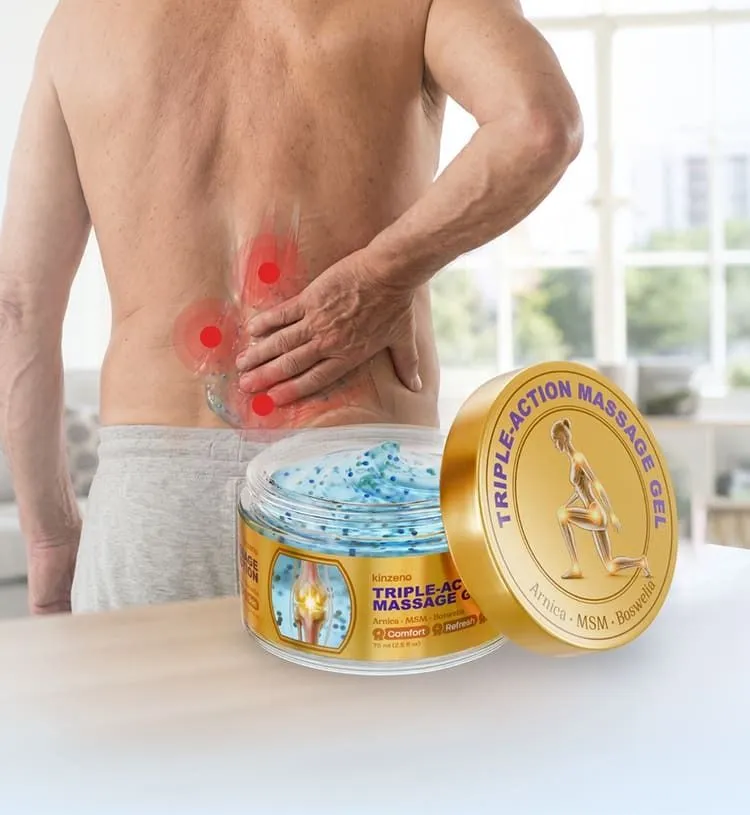
If your back pain is the everyday muscular kind, the step we recommend so you're not just ignoring it is Kinzeno Gel. It's a drug-free cooling massage gel made for exactly the part of the routine people skip — the daily massage — and it turns it into a one-minute habit:
- Made for this job: the maker describes a 3-phase action — a fast cooling sensation to relieve, magnesium and MSM to help restore tight muscles, and botanicals to renew comfort and easier movement.
- Familiar ingredients: MSM, arnica, magnesium and Boswellia (frankincense), plus skin-friendly allantoin and vitamin E — see our ingredients guide.
- One minute, not an afternoon: massage a coin-sized amount into the sore area for a minute or two, up to 2–4 times a day as needed — on the couch, after a shower or before bed.
- Non-greasy and drug-free: it absorbs without a film and doesn't add another pain medicine to your day.
Kinzeno Gel is sold through its official website, where the current promotion applies: $34.99 for one jar, $29.99 per jar in a 2-pack, $24.99 per jar in a 3-pack and $19.99 per jar in the 4-pack — up to 70% off. Ordering on the official site is the way to get the original product with the manufacturer's guarantee. Results vary from person to person, so use it consistently alongside gentle movement, patch-test it the first time, and see your doctor if you notice any red flag.
Don't just wait it out
Kinzeno Gel combines MSM, arnica, magnesium and Boswellia in a drug-free, non-greasy cooling massage gel — and the official site is running a limited-time deal of up to 70% off right now.
See the Kinzeno deal (up to 70% off) → Or read our full Kinzeno Gel review first →Frequently asked questions
Will back pain go away on its own?
Everyday muscular back pain often improves within days to a few weeks. But going away is not the same as being fixed: if the habit that triggered it stays the same, the pain often comes back. Staying gently active and building a short daily routine helps it settle faster and return less often.
Can ignoring back pain make it worse?
It can make it last longer. When you push through the same habits, or stop moving out of fear, muscles tend to stay guarded and stiff, you start moving differently, sleep can suffer and you may do less overall. Those changes can keep a simple flare-up going far longer than it needs to.
How long is too long to wait with back pain?
If you have no red flags, many people try home care for one to two weeks. If the pain is not clearly improving after a couple of weeks, keeps coming back, or still bothers you after several weeks, book an appointment with your doctor or a physical therapist. Pain lasting longer than about three months is generally described as chronic and deserves a proper evaluation.
Which back pain symptoms should never be ignored?
Get urgent care for loss of bladder or bowel control, numbness in the groin or inner thighs, or sudden weakness in a leg. See a doctor promptly for back pain after a fall or accident, with fever or unexplained weight loss, with numbness or tingling down a leg, or pain that wakes you every night.
How can Kinzeno Gel help if I don't want to ignore my back pain?
Kinzeno Gel makes the daily massage part of a home routine quick and easy: massage a coin-sized amount into the sore area for a minute or two, up to 2 to 4 times a day, alongside gentle movement. It is a drug-free cooling massage gel, so use it on intact skin, patch-test it the first time, and see a doctor if you have any red flag. Using other rubs or pain pills too? Our safe-use guide explains how to combine them.
Give your back one minute a day
Get Kinzeno Gel from the official site while the up-to-70%-off deal lasts.
Get Kinzeno Gel →