Heat or Ice for Back Pain and Sore Muscles? When to Use Each (and Where a Massage Gel Fits)
Everyone has an opinion. Your gym buddy swears by ice baths, your mother reaches for the heating pad, and the internet says both are right and both are wrong. The confusion is understandable, because the honest answer is “it depends on what kind of pain you have.” The good news is that the rule is simple once someone lays it out.
This guide does exactly that: when ice helps, when heat helps, when they work best together, the mistakes that make either one backfire, and where a massage gel fits so you are not chained to a freezer or a power outlet all day.
Why hot and cold do opposite things
Heat and cold both work on the same two levers: blood flow and nerve signals. They just pull them in opposite directions.
- Cold narrows blood vessels and slows activity in the area. That is useful when a muscle has just been strained and the body's response is swelling and heat. Cold also dulls the sharp pain signals for a while.
- Heat widens blood vessels and brings more circulation. That is useful when the problem is tightness rather than swelling: warm muscle fibers relax, move more easily and feel less stiff.
Put simply: cold calms an angry area; heat loosens a tight one. Pick the wrong one and you can make the problem louder — heat on a fresh, swollen strain can increase the swelling, while ice on an already stiff back can make it feel tighter.
When to use ice
Reach for cold when the pain is new and the area looks or feels inflamed:
- You lifted something wrong, twisted or fell within the last day or two.
- The spot is swollen, warm to the touch or red.
- Soreness right after a hard workout or yard work.
- A sharp flare-up of an old problem that has suddenly gotten worse.
How: wrap an ice pack or a bag of frozen peas in a thin towel and apply for 15–20 minutes, then wait at least an hour before repeating. Never place ice directly on bare skin.
When to use heat
Reach for warmth when the pain is tight, stiff and ongoing rather than swollen:
- Stiffness first thing in the morning (our guide on why you wake up stiff and sore covers this in detail).
- A back or neck that locks up after hours at a desk or behind the wheel.
- Muscle knots and spasms that ease when you move or stretch.
- Recurring, dull aches with no swelling.
How: a warm shower, a heating pad on low or a warm towel for 15–20 minutes. Keep a layer between the pad and your skin and never fall asleep on it.
Heat vs. ice: the one-glance decision table
| What you feel | Best first choice | Why |
|---|---|---|
| Fresh strain, less than 48 hours old | Ice | Calms swelling and dulls sharp pain |
| Swollen, warm or red area | Ice | Heat would increase the swelling |
| Stiff back or neck in the morning | Heat | Relaxes tight fibers, improves movement |
| Knots and tension after desk work | Heat, then massage | Warmth loosens, massage targets the spot |
| Recurring dull ache, no swelling | Heat | Boosts circulation to a tired muscle |
| Soreness during a busy day, no time to sit | Cooling massage gel | Soothing sensation plus massage, anywhere, in two minutes |
| Pain after a fall, with numbness or fever | Doctor | Not a job for home remedies |
Using both: the “warm up, cool down” approach
For a muscle that is both tight and sore — which describes most backs after 40 — the two work best as a team:
- Heat before activity to loosen the area and make movement easier.
- Ice after activity if the area tends to feel hot or puffy afterward.
- Massage in between to work on the specific spot that bothers you most.
Many readers tell us that massage is the step they used to skip because it felt like extra effort. A good gel changes that: with Kinzeno Gel, the massage step takes about two minutes and you can do it right after the shower or at your desk.
Five mistakes that make heat or ice backfire
- Heat on a fresh, swollen injury. It feels nice for a minute and then the area puffs up more. Wait 48 hours.
- Ice on bare skin, or for too long. Twenty minutes is plenty. Longer risks irritating the skin and makes muscles tighter.
- Falling asleep on a heating pad. A common cause of skin burns. Use a timer or a warm shower instead.
- Treating only the spot that hurts. Back pain often comes from tight hips or hours of slouching. Our 5-minute desk-job fixes tackle the cause, not just the symptom.
- Doing nothing else. Heat and ice are helpers. Gentle movement, a decent pillow and short breaks from sitting do the heavy lifting.
Where a massage gel fits in
Ice packs need a freezer. Heating pads need an outlet and twenty quiet minutes. Real life rarely cooperates: the ache shows up on the commute, at your desk, after a workout or while you are traveling. That gap is exactly where a cooling massage gel earns its place. You massage it into the sore spot in about two minutes, it creates a soothing cooling sensation on the skin while you work the muscle, and you get on with your day.
It is not a replacement for ice on a fresh, swollen injury or for a doctor when something is seriously wrong. It is the practical, everyday tool for the kind of soreness most of us actually have.
When back pain needs a doctor
Please get checked, rather than treating it at home, if your pain:
- Follows a fall, accident or heavy impact.
- Shoots down a leg with numbness, tingling or weakness.
- Comes with fever, unexplained weight loss or problems with bladder or bowel control.
- Has not improved after a few weeks of self-care, or keeps getting worse.
This article is general information, not medical advice. If you have a medical condition, are pregnant or take medication, talk to your doctor before starting a new routine or product.
Our recommendation: Kinzeno Gel
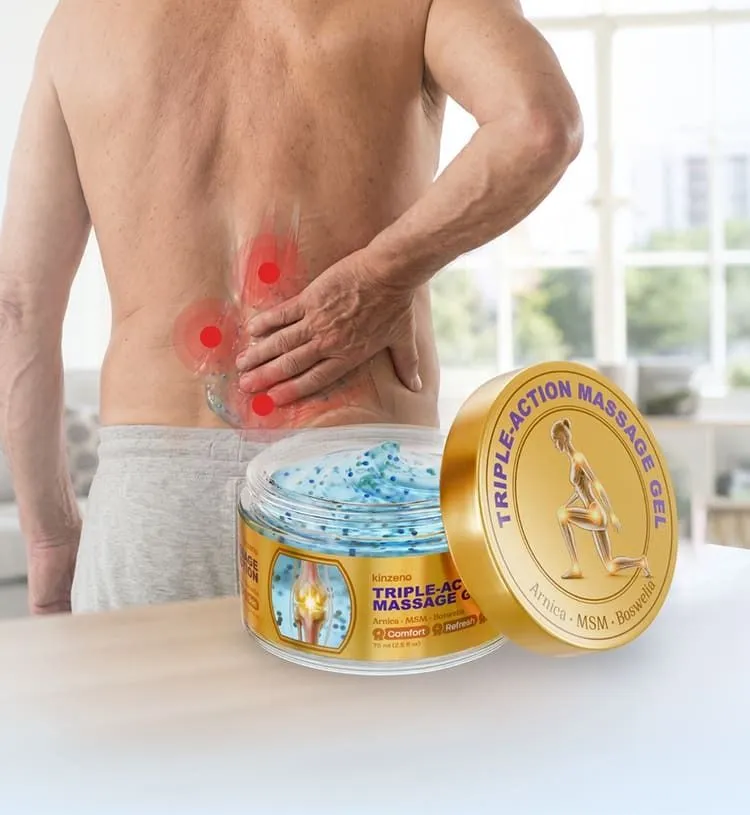
For everyday muscle, joint and back soreness — the kind that does not need an ice pack or a doctor, just relief you can use anywhere — the product we recommend is Kinzeno Gel. It is a drug-free, NSAID-free massage gel made exactly for this, and it slots neatly into the heat-and-ice routine above as the step you can take at any hour of the day.
- Cooling where you need it: the maker describes a 3-phase action — a fast cooling sensation to relieve, magnesium and MSM to help restore tight muscles, and botanicals to renew comfort and easier movement.
- Four well-known ingredients: MSM, arnica, magnesium and Boswellia (frankincense), plus skin-friendly allantoin and vitamin E. Each one is explained in our Kinzeno Gel ingredients guide.
- No freezer, no outlet, no timer: a coin-sized amount massaged in for a minute or two, up to 2–4 times a day as needed.
- Non-greasy and quick: it absorbs without a film, so you can apply it after a warm shower and get dressed, or use it at your desk without staining your clothes.
Kinzeno Gel is sold through its official website, where the current promotion applies: $34.99 for one jar, $29.99 per jar in a 2-pack, $24.99 per jar in a 3-pack and $19.99 per jar in the 4-pack — up to 70% off. Ordering on the official site is the way to get the original product with the manufacturer's guarantee. Results vary from person to person, so give it a couple of weeks of consistent use alongside the heat-and-ice basics above.
Relief you can use anywhere
Kinzeno Gel combines MSM, arnica, magnesium and Boswellia in a drug-free, non-greasy cooling massage gel — and the official site is running a limited-time deal of up to 70% off right now.
See the Kinzeno deal (up to 70% off) → Or read our full Kinzeno Gel review first →Frequently asked questions
Is heat or ice better for back pain?
It depends on what kind of pain it is. Ice is generally the better choice in the first 24 to 48 hours after a fresh strain, when the area may be swollen or warm, because cold narrows blood vessels and dulls the sharp pain. Heat is better for tightness, stiffness and recurring aches, because warmth relaxes muscles and increases blood flow. Many people use both at different stages.
How long should I use ice or heat?
About 15 to 20 minutes at a time, with at least an hour between sessions. Always put a thin towel between your skin and an ice pack or heating pad, and never fall asleep on either one.
Can I use heat and ice on the same day?
Yes. A common approach for a muscle that is both stiff and sore is heat before activity to loosen it up, and ice afterward to calm it down. Just leave time between the two and listen to how your body responds.
Is a cooling massage gel the same as ice?
No. An ice pack physically lowers tissue temperature. A cooling massage gel like Kinzeno creates a cooling sensation on the skin while you massage the area, which many people find soothing for everyday soreness. Its advantage is convenience: no freezer, no timer, and you can use it at a desk or on the go, up to 2 to 4 times a day as needed.
When should I use Kinzeno Gel instead of a heating pad?
A heating pad is great when you can sit still for 20 minutes. Kinzeno Gel is the practical option when you cannot: in the morning before work, at your desk, after a workout or while traveling. Massaging a coin-sized amount into the sore spot takes about two minutes and leaves no greasy film.
When should back pain be seen by a doctor?
See a doctor if the pain follows a fall or accident, shoots down a leg with numbness or weakness, comes with fever or unexplained weight loss, affects bladder or bowel control, or has not improved after a few weeks of self-care.
Ready for everyday relief?
Get Kinzeno Gel from the official site while the up-to-70%-off deal lasts.
Get Kinzeno Gel →