Can You Use a Pain Relief Gel With Ibuprofen, Heat or Other Creams? A Simple Safe-Use Guide
Most of us don't use just one thing when our back, knees or shoulders ache. We take a couple of pills, grab the heating pad, rub in whatever cream is in the bathroom cabinet — sometimes all in the same evening. And then the question pops up: is it actually OK to mix these?
It's a smart question, and one people search for constantly: "can I use a pain gel with ibuprofen?", "can you put a heating pad over a muscle rub?", "can I use two creams at once?". This guide answers each one in plain English, gives you a quick table to keep handy, and explains why a simple drug-free gel is the easiest piece to fit into the routine you already have. It's general information, not medical advice — your pharmacist is the best person to check your specific medicines.
First, know which kind of gel you have
"Pain relief gel" covers very different products, and the answer to almost every combination question depends on which one is in your hand. Turn the tube or jar over and look at the label:
- Medicated NSAID gels. These list a drug such as diclofenac or ibuprofen as the active ingredient. They are real medicines applied to the skin, with their own directions and warnings.
- Counterirritant rubs. Menthol, camphor, methyl salicylate or capsaicin create a cooling or warming sensation that distracts from the ache. Methyl salicylate is related to aspirin, which matters for some people.
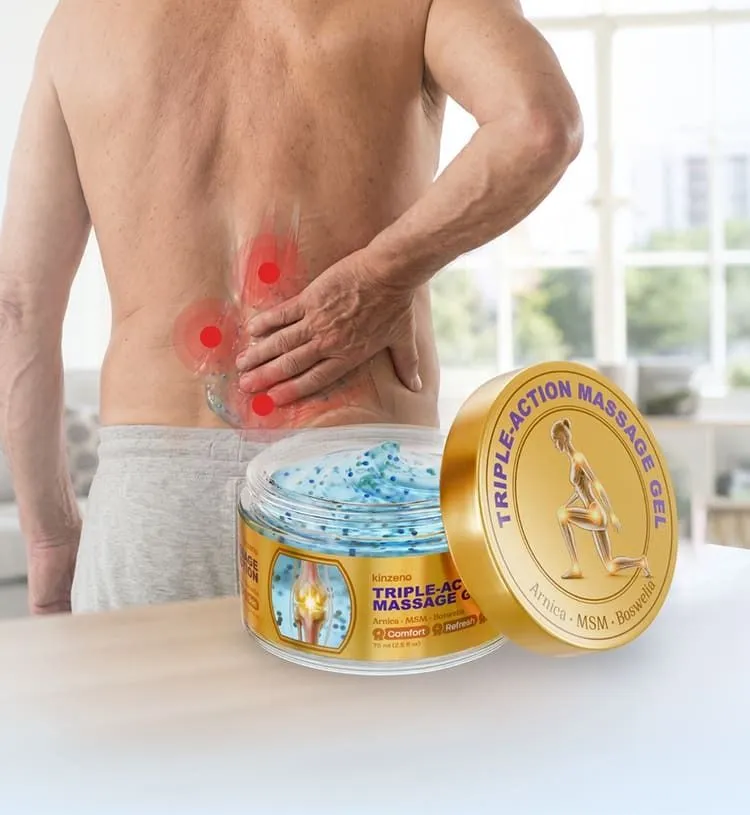
- Drug-free massage gels. These are made from ingredients such as MSM, arnica, magnesium and botanical extracts, designed to make massage easier and more soothing. Kinzeno Gel belongs in this group, and our Kinzeno Gel ingredients guide explains what each ingredient is there for.
Why this matters: most combination problems come from doubling up on the same type of medicine or from trapping heat over an active rub. Once you know your product's category, the rest is easy.
Pills plus a gel: ibuprofen, naproxen and acetaminophen
This is the most common question, and the honest answer is "it depends on the gel":
- NSAID gel + NSAID pill (for example, a diclofenac gel plus ibuprofen or naproxen tablets): this stacks two medicines of the same family. Don't combine them on your own — ask a pharmacist or doctor first, especially if you are older, have stomach, kidney or heart concerns, or take blood thinners.
- Aspirin-related rubs (methyl salicylate) deserve the same caution if you take aspirin or blood thinners, or are allergic to aspirin.
- Acetaminophen (Tylenol) works differently from NSAIDs, but always follow the dose on the package and check with your pharmacist if you use any medicine regularly.
- Drug-free massage gels don't add another pain medicine to the mix, which is why many people use one as the everyday "first step" and keep pills for the days they really need them. If you take prescription medicine, it is still a good idea to mention any new product to your pharmacist.
Heat and a gel: the heating pad question
Heat is wonderful for stiff, tight muscles — our heat or ice guide explains when to use it. The catch is what you put under it. Many rub labels, especially those with menthol, camphor or capsaicin, specifically warn against using a heating pad, hot water bottle or tight bandage over the treated skin, because trapped heat can irritate the skin or even cause burns.
The simple, safe order is:
- 1. Heat first — a warm shower or a heating pad on low for 15–20 minutes, with a layer between the pad and your skin.
- 2. Let the skin settle for a few minutes, until it no longer feels hot.
- 3. Massage in the gel for one or two minutes and leave the area uncovered so it can absorb.
Never fall asleep on a heating pad, and skip heat altogether on an area that is swollen, red or hot.
Ice and a gel
Cold is the better choice for a fresh strain or an area that feels puffy and warm. Again, the rule is one at a time: a towel-wrapped cold pack for 15–20 minutes, wait until the skin feels normal again, then apply the gel. Don't press ice directly over freshly applied gel, and never put ice straight on bare skin.
Two creams at once?
It's tempting to layer: a little of the old rub, a little of the new gel. We don't recommend it. Layering several products on the same patch of skin makes irritation more likely and makes it impossible to tell which one is actually helping. Pick one product per area. If you want to switch, wash the area with soap and water first.
Quick reference: what combines well
| Combination | Generally | How to do it |
|---|---|---|
| Drug-free massage gel + gentle movement | Great pair | Massage in the gel, then walk or stretch gently |
| Drug-free gel + heat | Yes, in order | Heat first, let skin settle, then the gel, uncovered |
| Any gel + ice | Yes, in order | Cold pack 15–20 min, skin back to normal, then the gel |
| NSAID gel + NSAID pills | Ask first | Only with a pharmacist's or doctor's OK |
| Heating pad over a menthol or capsaicin rub | Avoid | Never trap heat over an active rub |
| Two rubs on the same spot | Avoid | One product per area; wash before switching |
7 safe-use habits for any topical product
- Read the label once, properly. Directions, how often, and any warnings about heat or bandages.
- Patch-test something new on a small area of skin the first time.
- Only on intact skin. Never on cuts, scrapes, rashes or sunburn.
- Wash your hands afterward and keep them away from your eyes.
- Don't bandage tightly over a rub unless the label says you can.
- Keep a short list of everything you use, pills and creams, to show your pharmacist.
- Stop and wash it off if the skin turns red, blistered or itchy.
If you are pregnant or breastfeeding, have a medical condition, or take prescription medication or blood thinners, talk to your doctor or pharmacist before adding any new product.
When to see a doctor instead of combining more
If you find yourself stacking more and more remedies, that is a signal in itself. Please get checked if you are taking pain pills most days, if the pain has not improved after one to two weeks, if it started with a fall or an injury, if it spreads down an arm or leg with numbness, tingling or weakness, or if a joint is red, hot and swollen. Everyday soreness should be getting easier with a simple routine, not harder.
Our recommendation: Kinzeno Gel
For everyday muscle, joint and back soreness, the product we recommend as the easy, low-fuss part of your routine is Kinzeno Gel. It is a drug-free, NSAID-free massage gel, which makes it simple to fit alongside the things you already do — a warm shower, a short walk, a stretch — without adding another pain medicine to the mix:
- Made for exactly this: the maker describes a 3-phase action — a fast cooling sensation to relieve, magnesium and MSM to help restore tight muscles, and botanicals to renew comfort and easier movement.
- Familiar ingredients: MSM, arnica, magnesium and Boswellia (frankincense), plus skin-friendly allantoin and vitamin E.
- Fits your routine: after the warm shower or heating pad, massage a coin-sized amount into the sore area for a minute or two, up to 2–4 times a day as needed.
- Non-greasy: it absorbs without a film, so you can use it before work or before bed without staining clothes or sheets.
Kinzeno Gel is sold through its official website, where the current promotion applies: $34.99 for one jar, $29.99 per jar in a 2-pack, $24.99 per jar in a 3-pack and $19.99 per jar in the 4-pack — up to 70% off. The 4-pack is the popular choice for households where more than one person deals with everyday aches. Ordering on the official site is the way to get the original product with the manufacturer's guarantee. Results vary from person to person, so use it consistently alongside gentle movement, and patch-test it the first time.
A simpler, drug-free step for everyday aches
Kinzeno Gel combines MSM, arnica, magnesium and Boswellia in a drug-free, non-greasy cooling massage gel — and the official site is running a limited-time deal of up to 70% off right now.
See the Kinzeno deal (up to 70% off) → Or read our full Kinzeno Gel review first →Frequently asked questions
Can I use a topical pain gel and take ibuprofen at the same time?
It depends on what is in the gel. If the gel itself contains an NSAID such as diclofenac or ibuprofen, using it while also taking an oral NSAID doubles up on the same kind of medicine, so ask a pharmacist or doctor first. A drug-free massage gel made from ingredients like MSM, arnica, magnesium and botanicals is a different situation, but it is still wise to mention it to your pharmacist if you take regular pain medication or blood thinners.
Can I use a heating pad over a pain relief gel?
Read the label first. Many muscle rubs, especially those with menthol, camphor or capsaicin, warn against using a heating pad or tight wrap over the treated skin because it can irritate or even burn the skin. A safer routine is to use heat first, let the skin cool for a few minutes, then massage in the gel and leave the area uncovered.
Can I use ice and a pain gel together?
Yes, but not at the same moment. Use a towel-wrapped cold pack for 15 to 20 minutes, wait until the skin returns to normal temperature and feeling, then massage in the gel. Do not put ice directly over freshly applied gel.
Is it OK to use two different pain creams on the same area?
It is best to use one product per area at a time. Layering several rubs can irritate the skin and makes it hard to know which one is helping. If you want to switch products, wash the area first and give your skin a break.
Can I use Kinzeno Gel if I take medication?
Kinzeno Gel is a drug-free, NSAID-free massage gel, which is why many people who already take medication like it for everyday soreness. Even so, if you take prescription medication or blood thinners, have a medical condition, or are pregnant or breastfeeding, check with your doctor or pharmacist before adding any new product, and patch-test it on a small area of skin first.
When should I stop combining remedies and see a doctor?
See a doctor if you are relying on pain pills most days, if the pain has not improved after one to two weeks, if it started with a fall or injury, if it spreads down an arm or leg with numbness or weakness, or if a joint is red, hot and swollen. Stop using a topical product and wash it off if your skin becomes red, blistered or itchy.
Keep one simple step in your routine
Get Kinzeno Gel from the official site while the up-to-70%-off deal lasts.
Get Kinzeno Gel →