Why Do I Wake Up Stiff and Sore? Morning Stiffness Explained (and a 10-Minute Routine That Helps)
The alarm goes off, you swing your legs out of bed — and your body feels about twenty years older than it did last night. Your lower back is tight, your neck doesn't want to turn, your knees creak on the way to the kitchen. By mid-morning you feel fine again, but tomorrow it starts all over.
If that's your routine, you're far from alone. Morning stiffness is one of the most common everyday complaints, and it becomes more noticeable with age, desk work and stress. The good news: in most cases it's not a sign of anything serious, and a few small changes make mornings dramatically easier. Below we explain why it happens, what people usually try, a 10-minute routine that works, the signs that mean you should get checked, and the gel we recommend to make it all easier.
Why your body stiffens up overnight
During the day, every step and stretch keeps your muscles warm and your joints moving. At night you lie mostly still for seven or eight hours, and a few things happen at once:
- Muscles cool and tighten. Without movement, muscles stay in one shortened position and feel tight when you first ask them to work.
- Blood flow slows down. Less circulation to resting muscles makes them feel heavier and slower to "wake up."
- Joints aren't being moved. The fluid that cushions and lubricates your joints is spread around by movement. After hours of stillness, the first movements feel stiffer.
- Yesterday catches up with you. A long day at a desk, yard work or a tough workout often shows up as stiffness the next morning.
On top of that, your sleep setup matters: a sagging mattress, a pillow that's too high or too flat, or sleeping on your stomach with your head twisted can hold your back and neck in an awkward position for hours. Stress and poor sleep also make muscles tenser, and with age joints and tissues naturally become less springy, which is why many people notice morning stiffness more after 40.
What people usually try — and how it works out
Most of us go through the same list before finding something that actually makes mornings easier:
| What people try | What it does | Our take |
|---|---|---|
| Just pushing through | Stiffness fades as the day goes on | Works eventually, but the first hour of every day stays uncomfortable |
| Hitting snooze and staying in bed | More rest | More stillness usually means more stiffness, not less |
| A hot shower | Warms and relaxes tight muscles | Great first step — even better followed by massage |
| Pain pills "just in case" | Takes the edge off | Not designed for daily stiffness; follow the label and ask your doctor or pharmacist |
| A heating pad | Soothing warmth | Pleasant, but you can't walk around with it while getting ready |
| Massage on the stiff spots | Helps tight muscles let go, right where it's needed | Quick and effective — easiest with a good massage gel |
The last row is the one most people skip, simply because it feels like extra work. A massage gel such as Kinzeno Gel turns it into a two-minute step you can do right after the shower, which is why it has become a favorite part of so many readers' morning routines.
A 10-minute morning routine that helps
You don't need a full workout. This routine takes about ten minutes and fits between the alarm and your first coffee:
1. Move before you get up (2 minutes)
While still lying on your back: point and flex your feet 10 times, gently hug one knee and then the other to your chest, and let both knees drop slowly from side to side. This wakes the muscles up before they have to carry your weight.
2. Get up the easy way
Roll onto your side, drop your legs over the edge of the bed and push yourself up with your arms. It's much kinder to a stiff lower back than sitting straight up.
3. Warm shower (3–5 minutes)
Aim the warm water at the stiffest areas — usually the lower back, neck and shoulders. Gentle shoulder rolls and slow neck turns under the warm water feel especially good.
4. Massage the stiff spots (2 minutes)
Right after the shower, while the muscles are warm, massage the areas that feel tightest. Slow circular pressure for a minute or two per area is plenty.
5. Keep moving for the first hour
Walk around while you make breakfast, take the stairs, and avoid sitting down for a long stretch straight away. If you work at a desk, our 5-minute fixes for desk-job back pain keep stiffness from building back up during the day.
Bonus: fix the night before
- Check your pillow: your head should stay level with your spine, not tilted up or down.
- Side sleepers: a pillow between the knees takes pressure off the lower back.
- A few gentle stretches and a short massage in the evening often mean less stiffness in the morning.
When morning stiffness needs a doctor
Everyday stiffness from a night of stillness is normal. Please check in with a doctor, rather than managing it on your own, if you notice:
- Stiffness that lasts much longer than half an hour most mornings.
- Joints that are swollen, warm or red, or stiffness in both hands or many joints at once.
- Stiffness with fever, unusual tiredness or unexplained weight loss.
- Pain that wakes you at night, follows an injury, or keeps getting worse over several weeks.
This article is general information, not medical advice. If you have a medical condition, are pregnant or take medication, check with your doctor before starting any new routine or product.
Our recommendation: Kinzeno Gel
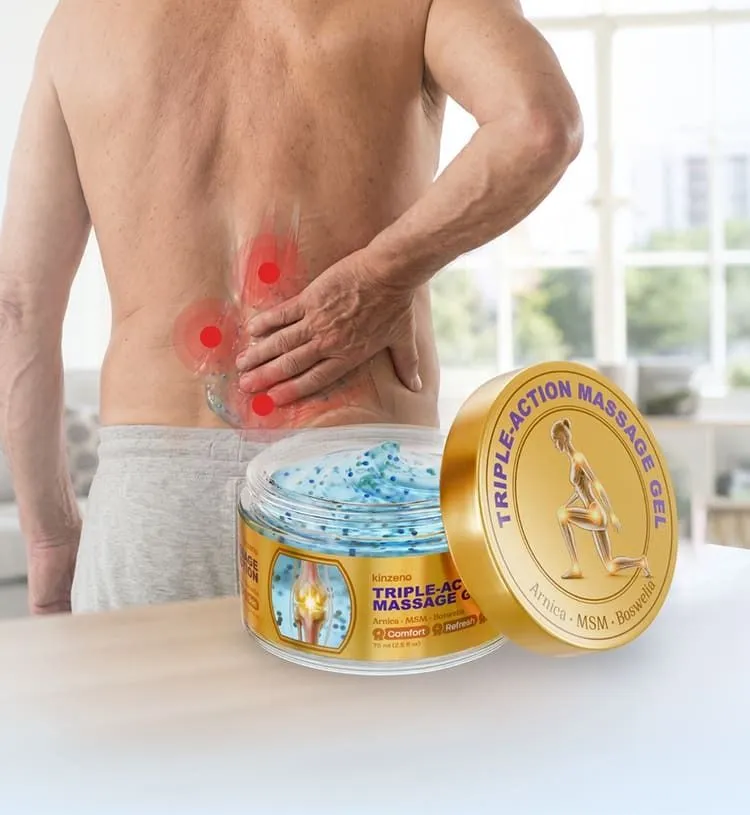
If you're tired of starting every day stiff, the product we recommend for your morning routine is Kinzeno Gel. It's a drug-free, NSAID-free massage gel made exactly for everyday muscle, joint and back discomfort — and it's the easiest way we know to add the "massage" step to your morning without slowing you down.
- Four well-known ingredients: MSM, arnica, magnesium and Boswellia (frankincense), plus skin-friendly allantoin and vitamin E. We explain each one in our Kinzeno Gel ingredients guide.
- A 3-phase action described by the maker: a fast cooling sensation to relieve, magnesium and MSM to help restore tight muscles, and botanicals to renew comfort and easier movement.
- Non-greasy and quick: it absorbs without leaving a film, so you can massage it in after the shower and get dressed right away.
- Fits any routine: use it in the morning, at your desk in the afternoon and again in the evening, up to 2–4 times a day as needed.
Kinzeno Gel is sold through its official website, where the current promotion applies: $34.99 for one jar, $29.99 per jar in a 2-pack, $24.99 per jar in a 3-pack and $19.99 per jar in the 4-pack — up to 70% off. Ordering on the official site is the way to get the original product with the manufacturer's guarantee. Results vary from person to person, so give the routine a couple of weeks of consistency.
Start your mornings looser
Kinzeno Gel combines MSM, arnica, magnesium and Boswellia in a drug-free, non-greasy massage gel — and the official site is running a limited-time deal of up to 70% off right now.
See the Kinzeno deal (up to 70% off) → Or read our full Kinzeno Gel review first →Frequently asked questions
Why am I so stiff when I wake up?
When you lie still for hours, muscles cool down and tighten, blood flow to them slows, and the fluid that lubricates your joints is not being moved around. Sleeping position, pillow and mattress, the previous day's activity, stress and age all add to it. For most people the stiffness eases as soon as they start moving.
How long should morning stiffness last?
Everyday morning stiffness from inactivity usually loosens within a few minutes to about half an hour of moving around. Stiffness that lasts much longer than that most mornings, keeps getting worse, or comes with swollen, warm joints is worth discussing with a doctor.
Can my mattress or pillow cause morning stiffness?
They can contribute. A mattress that sags, or a pillow that is too high or too flat, can hold your back and neck in an awkward position for hours. If you wake up stiff in the same spot most mornings, your sleep setup is one of the first things to check.
Is a warm shower or a massage gel better for morning stiffness?
They work well together. A warm shower helps tight muscles relax, and a couple of minutes of massage with a soothing gel afterward targets the spots that feel stiffest. Many people find the combination the fastest way to feel loose and ready for the day.
How do I use Kinzeno Gel in the morning?
After a warm shower or a few gentle stretches, apply a coin-sized amount to the stiffest area, such as the lower back, neck, shoulders or knees, and massage it in with slow circular pressure for a minute or two. It absorbs without a greasy film, so you can get dressed right away.
When is morning stiffness a reason to see a doctor?
See a doctor if stiffness lasts much longer than half an hour most mornings, if joints are swollen, warm or red, if it affects both hands or several joints, if it comes with fever, fatigue or weight loss, or if it keeps getting worse over weeks.
Ready for easier mornings?
Get Kinzeno Gel from the official site while the up-to-70%-off deal lasts.
Get Kinzeno Gel →