Desk-Job Back Pain: 5 Fixes That Take 5 Minutes (Plus an Easy End-of-Day Routine)
It's 3 p.m. You've been in the same chair since morning, and when you finally stand up, your lower back reminds you with a dull, stiff ache. Maybe your neck and shoulders feel tight too. If that sounds familiar, you're in very good company — back discomfort is one of the most common complaints among people who spend their workday sitting.
The good news: desk-job back pain is usually muscular and very responsive to small daily changes. You don't need a new office or an hour at the gym. Below are five fixes that each take about five minutes, a simple end-of-day routine, and the signs that mean it's time to talk to a doctor instead.
Why sitting all day is hard on your back
Your spine and the muscles around it are built for movement. Sitting itself isn't "bad" — the trouble is sitting still, in the same position, for hours. Three things tend to happen during a long workday:
- You slump. As you get tired or focused, the lower back rounds and the head drifts toward the screen. The muscles of the lower back and neck have to work harder to hold you up.
- Your hips stay bent. Hours in a seated position keep the hip muscles in a shortened position, which many people feel as tightness in the lower back when they finally stand.
- Nothing moves. Muscles like small, frequent changes. Without them, they stiffen and tire, and the ache builds through the afternoon.
We explain how everyday muscle, joint and back pain develops — and why treating it right where it hurts makes sense — in our plain-English guide to muscle, joint and back pain.
5 fixes that take 5 minutes
1. Set a 30-minute movement reminder
This is the single most useful habit. Every 30 minutes or so, stand up, stretch your arms overhead, roll your shoulders and take a few steps — even 60 seconds counts. Refill your water, take a phone call standing, or walk to a colleague's desk instead of sending a message. Frequent short breaks beat one long break at the end of the day.
2. Adjust your chair and screen once
Five minutes of setup pays off every single day:
- Feet flat on the floor (or on a footrest), knees at about hip height.
- Screen at eye level and about an arm's length away — prop a laptop on books and use a separate keyboard.
- Keyboard and mouse close, so your elbows stay bent near your sides.
- Sit all the way back in the chair instead of perching on the edge.
3. Give your lower back some support
Most chairs leave a gap behind the lower back, so you slowly sink into a slump. A lumbar cushion — or simply a rolled-up towel placed at belt level — keeps the natural curve of your lower back supported without any effort on your part.
4. Take a two-minute stretch break
Twice a day, try this quick sequence at your desk. Move slowly and stay in a comfortable range — a stretch should feel like a gentle pull, never sharp pain.
| Stretch | How to do it | Time |
|---|---|---|
| Seated twist | Sit tall, place your right hand on the outside of your left knee and gently turn your upper body to the left. Switch sides. | 20–30 sec per side |
| Standing back bend | Stand, place your hands on your lower back and gently lean back a little, looking up. Return to upright. | 5 slow reps |
| Hip flexor stretch | Step one foot back into a small lunge, keep your torso upright and gently tuck your hips until you feel the front of the hip stretch. | 20–30 sec per side |
| Shoulder rolls & chin tucks | Roll your shoulders back 5 times, then gently glide your chin straight back, as if making a double chin. | 30 sec |
5. Walk at lunch
A 5–10 minute walk in the middle of the day is one of the most underrated back-care habits there is. It gets the hips moving, loosens the lower back, and gives your eyes and brain a break from the screen too. If you can, take some calls while walking as well.
The end-of-day reset: massage where it hurts
Even with good habits, a long day can leave your lower back and shoulders tight. That's where a short evening reset helps: a warm shower aimed at the back, followed by two to five minutes of self-massage on the sore areas. Massage helps tight muscles let go and gives the nervous system a more pleasant signal to focus on — and it's easy to do on the couch.
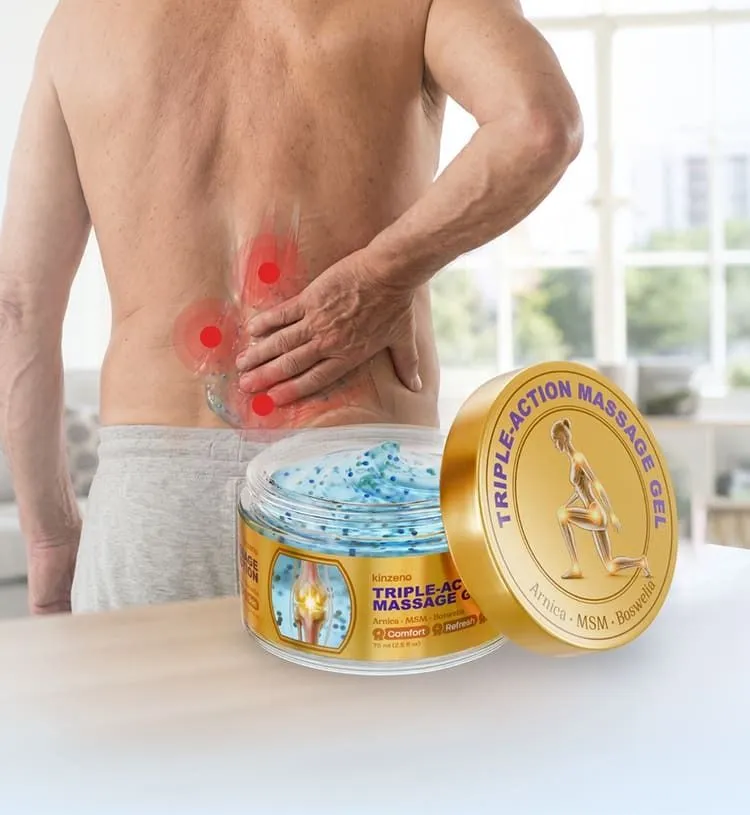
A good massage gel makes this step more effective and more enjoyable. Kinzeno Gel is a drug-free, NSAID-free massage gel designed exactly for this kind of daily routine. It's built around four well-known ingredients — MSM, arnica, magnesium and Boswellia (frankincense) — plus skin-friendly helpers like allantoin and vitamin E, and it absorbs without leaving a greasy film. The maker describes a 3-phase action: a fast cooling sensation to relieve, magnesium and MSM to help restore tight muscles, and botanicals to renew comfort and easier movement. You can read what each ingredient does in our guide to Kinzeno Gel ingredients.
- Apply a coin-sized amount to the lower back, or to the neck and tops of the shoulders.
- Massage in with slow circular pressure for a minute or two — the massage is part of how the gel works.
- Use it at your desk in the afternoon and again in the evening, up to 2–4 times a day as needed.
- Keep pairing it with the five habits above — consistency is what makes the difference.
Make the evening reset easy
Kinzeno Gel combines MSM, arnica, magnesium and Boswellia in a drug-free, non-greasy massage gel — and the official site is running a limited-time deal of up to 70% off right now.
See the Kinzeno deal (up to 70% off) → Or read our full Kinzeno Gel review first →Quick comparison: what each habit does for your back
| Habit | Main benefit | Effort |
|---|---|---|
| 30-minute movement breaks | Prevents stiffness from building up | 1 min, several times a day |
| Chair & screen setup | Reduces slumping and neck strain all day | 5 min, once |
| Lumbar support | Keeps the lower back's natural curve supported | Seconds |
| Stretch break | Loosens hips, back and shoulders | 2 min, twice a day |
| Lunch walk | Gets the whole body moving mid-day | 5–10 min |
| Evening massage with a gel | Soothes tight muscles right where they hurt | 2–5 min |
When back pain needs a doctor
Most desk-related back pain improves with movement and better habits. But please check in with a doctor rather than self-managing if you notice any of these:
- Pain that started after a fall, accident or injury.
- Numbness, tingling or weakness in the legs or feet, or pain that shoots down one leg.
- Pain that keeps getting worse, wakes you at night, or lasts more than a few weeks.
- Back pain with fever, unexplained weight loss, or any change in bladder or bowel control — seek care right away.
This article is general information, not medical advice. If you're pregnant, taking medication or managing a medical condition, check with your doctor before starting any new routine or product.
Pricing and where to buy
Kinzeno Gel is sold through its official website, where the promotional pricing applies: $34.99 for a single jar, $29.99 per jar in a 2-pack, $24.99 per jar in a 3-pack and $19.99 per jar in the 4-pack (up to 70% off). Prices can change, so always confirm the current offer at checkout. For a side-by-side look at the packs, visit our Kinzeno Gel homepage.
Frequently asked questions
Why does my lower back hurt after sitting all day?
Most desk-related back pain is muscular. Sitting for hours, especially slumped or perched on the edge of the chair, keeps the muscles of the lower back and hips in one position with no break. They stiffen and tire, and by evening the area feels tight and achy.
How often should I get up from my desk?
A practical rule is to change position or stand up at least every 30 minutes, even if only for a minute. Short, frequent movement breaks tend to help back stiffness more than one long break at the end of the day.
Is heat or a cooling gel better for desk-job back pain?
Both can feel good. Gentle heat helps tight muscles relax, while a cooling gel gives quick, refreshing relief and lets you massage the area at the same time. Many people like a cooling massage gel during the day and a warm shower in the evening.
Can a massage gel help lower back pain from sitting?
A massage gel can make a daily routine more comfortable: the massage itself helps tight muscles let go, and soothing ingredients add a pleasant cooling feel. It works best alongside movement breaks and a better desk setup, and it is not a substitute for medical care when something is wrong.
When should I see a doctor about back pain?
See a doctor if back pain follows a fall or injury, keeps getting worse, lasts more than a few weeks, wakes you at night, or comes with numbness, tingling or weakness in the legs, fever, or problems with bladder or bowel control.