Back Pain After Raking Leaves or Yard Work? What to Do Tonight, Tomorrow and Next Time
Every fall it is the same story. The leaves come down, you finally get a free Saturday, and you spend four hours raking, bagging and hauling. It feels productive right up until you sit down for dinner, and then your lower back announces that it has opinions. By the next morning, getting out of bed feels like a two-step process.
You are in good company. Every autumn, hospitals and physical therapists publish raking-safety tips for exactly this reason, and their advice is remarkably consistent. This guide turns it into a simple plan: what to do tonight, what to do over the next 48 hours, how long it usually takes, and how to make your next yard day easier on your back.
Why yard work is so hard on your back
Raking looks gentle. It is not. It quietly stacks up several things your lower back dislikes:
- Hours bent forward. Most rakes are held low, so you spend the whole session hinged at the waist, with the back muscles holding your upper body up.
- The same twist, hundreds of times. Pulling leaves toward you while your feet stay planted puts a repeated rotation through the same muscles on one side.
- Surprisingly heavy lifting. A bag of damp leaves can weigh far more than it looks, and it usually gets lifted with a rounded back.
- No warm-up. Most of us go from the couch straight to the yard, with cold muscles that were sitting at a desk all week.
- Doing it all at once. Trying to finish the whole yard in one go means the last hour is done with muscles that are already tired.
The result is the classic pattern: you feel fine while working, a bit stiff at dinner, and properly sore the next morning, when tired muscles have tightened overnight. If that morning stiffness sounds familiar, our guide on why you wake up stiff and sore explains what happens while you sleep.
Tonight: a 15-minute recovery routine
- 1. Stop for the day. Leave the last corner of the yard for another day. Pushing through is how mild soreness turns into a strain.
- 2. Drink a big glass of water. You probably sweated more than you noticed, even on a cool day.
- 3. Take a warm shower. Ten minutes of warm water on the lower back helps tight muscles let go. If the area feels hot or puffy, or you felt a sudden sharp twinge, skip the heat and use a towel-wrapped cold pack for 15–20 minutes instead. Our heat or ice guide shows which one to pick.
- 4. Massage the sore area for two minutes. Work along the muscles on either side of the spine, not on the spine itself, with slow, firm circles.
- 5. Move gently. A slow five-minute walk around the house and a few easy knee-to-chest stretches lying on your back. Nothing should hurt sharply.
- 6. Sleep smart. On your back with a pillow under your knees, or on your side with a pillow between your knees, keeps the lower back in a relaxed position.
The next 48 hours: what helps and what to avoid
| Do | Avoid |
|---|---|
| Short walks several times a day | Full bed rest or hours on the couch |
| Warm shower or heat for stiffness in the morning | Heat on an area that is swollen or hot |
| Massage the sore area morning and evening | Heavy lifting, bending to pick up heavy bags |
| Gentle stretches that feel good | Stretching into sharp pain |
| Getting up from your desk every 30–45 minutes | “Finishing the yard” while you are still sore |
Monday at the desk can make a sore back feel worse, because sitting still lets the muscles stiffen again. Our 5-minute desk-job back pain fixes are a good companion for the work week after a big yard weekend.
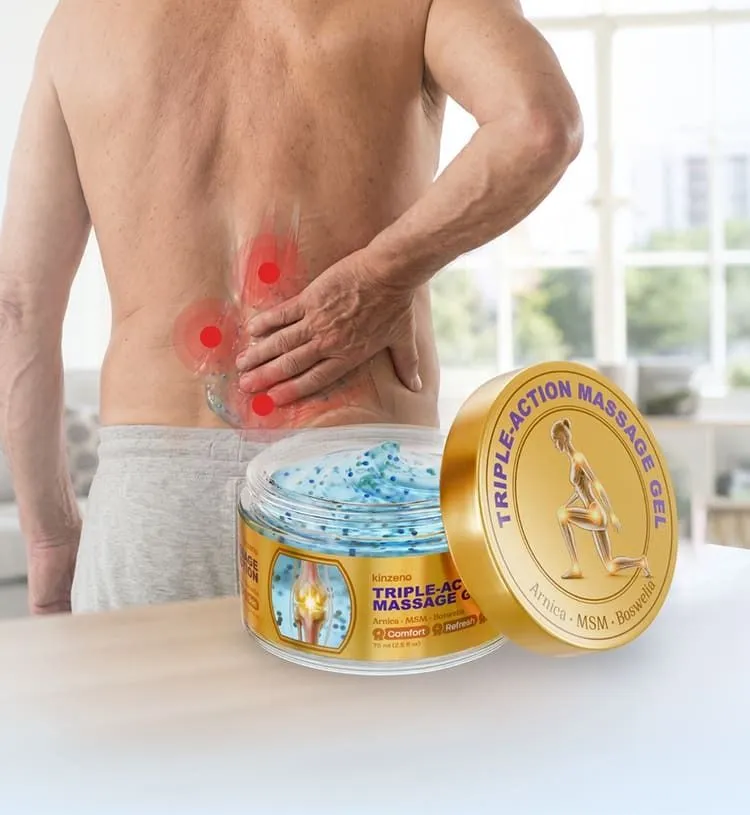
This is also where a massage gel earns its place. A heating pad needs an outlet and twenty quiet minutes; a massage gel takes two minutes in the morning before work and again in the evening. That is why so many readers keep Kinzeno Gel on the bathroom shelf during leaf season.
How long does it take to feel better?
Every back is different, but this is the usual pattern for ordinary muscle soreness after a big yard day:
- Day 1 (the evening): tightness and a dull ache, mostly when you stand up after sitting.
- Day 2: often the stiffest day, especially first thing in the morning. Gentle movement helps more than rest.
- Days 3–4: soreness fades noticeably; you are aware of your back but moving normally.
- Up to 1–2 weeks: if you actually strained a muscle, it can take this long to settle fully.
If the pain is not clearly improving after a week or two, keeps getting worse, or wakes you up at night, it is time to have it checked.
Next time: how to rake without the ache
- Warm up for five minutes. A brisk walk around the yard, a few hip circles and gentle side bends.
- Use the right rake. A handle that reaches about shoulder height means less bending at the waist.
- Move your feet, not your spine. Step and shuffle with the rake instead of twisting from the waist.
- Switch sides every few minutes. Change which hand is on top so one side does not do all the work.
- Rake onto a tarp and drag it. Far less bending and lifting than filling bag after bag.
- Keep bags half full and lift with bent knees, holding the bag close to your body. Wet leaves are heavier.
- Split the job. Forty-five minutes a day over a few days is much kinder to your back than one marathon session.
- Massage before and after. A quick application of a massage gel before you start and after you finish turns recovery into part of the routine.
When back pain after yard work needs a doctor
Please get checked, rather than treating it at home, if your pain:
- Started with a fall, a sharp “pop” or a sudden inability to straighten up.
- Shoots down a leg with numbness, tingling or weakness.
- Comes with fever or problems with bladder or bowel control.
- Has not improved after one to two weeks, or keeps getting worse.
This article is general information, not medical advice. If you have a medical condition, are pregnant or take medication, talk to your doctor before starting a new routine or product.
Our recommendation: Kinzeno Gel
For the sore, tight lower back that follows a weekend of raking, digging and hauling, the product we recommend is Kinzeno Gel. It is a drug-free, NSAID-free massage gel made exactly for everyday muscle, joint and back soreness, and it makes the massage step of the routine above fast enough that you will actually do it.
- Feels good right away: the maker describes a 3-phase action — a fast cooling sensation to relieve, magnesium and MSM to help restore tight muscles, and botanicals to renew comfort and easier movement.
- Well-known ingredients: MSM, arnica, magnesium and Boswellia (frankincense), plus skin-friendly allantoin and vitamin E. Our Kinzeno Gel ingredients guide explains each one in plain English.
- Two minutes, anywhere: a coin-sized amount massaged into the sore area, up to 2–4 times a day as needed. No freezer, no outlet, no timer.
- Non-greasy: it absorbs without a film, so you can use it after your evening shower and again before work without staining your clothes.
Kinzeno Gel is sold through its official website, where the current promotion applies: $34.99 for one jar, $29.99 per jar in a 2-pack, $24.99 per jar in a 3-pack and $19.99 per jar in the 4-pack — up to 70% off. The 4-pack is the popular choice for households where more than one person is out raking. Ordering on the official site is the way to get the original product with the manufacturer's guarantee. Results vary from person to person, so use it consistently alongside the gentle movement above.
Make leaf season easier on your back
Kinzeno Gel combines MSM, arnica, magnesium and Boswellia in a drug-free, non-greasy cooling massage gel — and the official site is running a limited-time deal of up to 70% off right now.
See the Kinzeno deal (up to 70% off) → Or read our full Kinzeno Gel review first →Frequently asked questions
Why does my back hurt after raking leaves?
Raking combines three things the lower back dislikes: hours of bending forward at the waist, the same twisting motion repeated hundreds of times, and lifting bags of leaves that can be heavier than they look, especially when wet. Most people also go straight from the couch to the yard without warming up, so tired muscles get overloaded and tighten up later that evening or the next morning.
How long does back pain from yard work last?
Ordinary muscle soreness from yard work usually peaks the next day and eases over two to four days with gentle movement. A mild strain can take one to two weeks to settle. If the pain is not clearly improving after a week or two, or keeps getting worse, have it checked.
Should I rest or keep moving after hurting my back raking?
Take it easy for the rest of the day, but avoid full bed rest. Short, gentle walks and normal light activity usually help a sore back loosen up faster than lying still. Skip heavy lifting and more yard work until the soreness has clearly eased.
How do I rake leaves without hurting my back?
Warm up for five minutes first, use a rake with a handle that reaches about shoulder height, move your feet instead of twisting your torso, switch hands every few minutes, rake onto a tarp and drag it instead of lifting, keep bags half full, and split a big yard into shorter sessions over several days.
Can I use Kinzeno Gel after yard work?
Yes. That is one of the moments it is made for. Massage a coin-sized amount into the sore area for a minute or two after a warm shower in the evening and again the next morning, up to 2 to 4 times a day as needed. It is drug-free and absorbs without a greasy film.
When should back pain after yard work be seen by a doctor?
See a doctor if the pain started with a fall or a sharp pop, shoots down a leg with numbness, tingling or weakness, comes with fever, affects bladder or bowel control, or has not improved after one to two weeks of self-care.
Ready for the next yard day?
Get Kinzeno Gel from the official site while the up-to-70%-off deal lasts.
Get Kinzeno Gel →