Arnica's Story: From Alpine Folk Remedy to Modern Massage Gel — What Tradition Said vs. What We Know Today
Pick up almost any "sports gel" or bruise cream in an American pharmacy and there's a good chance one word is printed on the label: arnica. Most people who buy it have no idea what it is — a plant? a chemical? a homeopathic thing? — or why it shows up next to sore-muscle products so often.
The short version is that arnica is one of the oldest "after-the-fall" remedies in European folk tradition, and it made the jump from farmhouse tinctures to modern topical products largely intact. Below is the story: where the plant grows, what tradition used it for, what today's regulators say, and how it's best used now. We stick to what's verifiable, and we say clearly where tradition ends and evidence begins. This is general information, not medical advice.
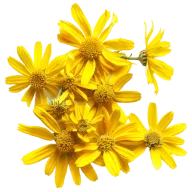
The plant: a yellow flower of the mountain meadows
Arnica montana — "mountain arnica" — is a perennial in the Asteraceae, the same big family as daisies, sunflowers, chamomile and marigolds. It grows in nutrient-poor mountain meadows and pastures in Europe, from the Alps and other central European ranges up into Scandinavia, and related arnica species grow in mountainous regions of North America and northern Asia. In midsummer it sends up a single stem with bright yellow, slightly ragged daisy-like flower heads.
Those flower heads are the part used in traditional preparations. In folk practice they were steeped in alcohol or oil to make tinctures and rubbing oils, or worked into salves — always to be applied to the skin.
What tradition used it for: "the remedy for falls"
In the mountain villages where it grew, arnica earned its reputation in the most practical way possible. Life involved steep slopes, livestock, timber and long days of physical work, and falls, knocks and strained muscles were part of the routine. A bottle of arnica tincture or oil was the household's answer: rubbed onto bruises, sprains, swelling from a knock and aching, overworked muscles.
The plant collected folk names that show how familiar it was in rural life — in English it has been called "mountain tobacco" and "leopard's bane," and in German it is still known as Fallkraut, the "fall herb." Over time arnica moved from home remedy to the pharmacy shelf: arnica flower has its own monograph in the European Pharmacopoeia, and today arnica creams, gels and ointments are common in pharmacies on both sides of the Atlantic.
What we know today: the regulators' verdict
Here's where we separate tradition from evidence. The most careful modern assessment we know of comes from the European Medicines Agency (EMA). Its Committee on Herbal Medicinal Products reviewed arnica flower and published a public summary (EMA: Arnica flower, summary for the public). Its key points:
- The approved use: "on the basis of its long-standing use," arnica flower preparations applied to the skin "can be used for the relief of bruises, sprains and localised muscle pain."
- Why "traditional": the committee judged clinical-trial evidence insufficient to prove effectiveness, but found the use plausible, with evidence of safe use for at least 30 years (including at least 15 in the EU).
- The studies: clinical studies in people with bruises and soft-tissue or joint pain showed a possible improvement in pain and bruising, but firm conclusions couldn't be drawn because of small and poorly controlled studies.
- Who and how long: for adults and adolescents from 12 years; if symptoms last longer than 3–4 days or get worse, see a doctor.
- Side effects: allergic skin reactions such as itching, redness and eczema have been reported.
In plain English: the centuries-old use on bruises, sprains and sore muscles is officially recognized as a sensible traditional use — not as a proven drug effect. That's an honest middle ground, and it matches how most people actually use arnica: as part of a comforting, hands-on routine for everyday aches.
Tradition vs. today, side by side
| Topic | What tradition said | What we know today |
|---|---|---|
| Uses | Falls, bruises, sprains, aching muscles | EMA: traditional use for relief of bruises, sprains and localized muscle pain |
| How it's used | Tinctures, rubbing oils and salves on the skin | Gels, creams and ointments applied to the skin |
| Evidence | Generations of household experience | Plausible and long used safely; trials too small for firm conclusions |
| By mouth? | Known to be risky | Undiluted arnica can be poisonous if swallowed — skin only |
| Who should be careful | — | Daisy-family allergies; broken skin; children under 12 |
Why arnica belongs on the skin, not in the mouth
One rule hasn't changed from the farmhouse to the pharmacy: arnica plant preparations are for external use. Taken by mouth, undiluted arnica can cause poisoning, which is why herbal arnica is sold as topical gels, creams and liquids. (Highly diluted homeopathic "arnica" pills are a different category altogether and aren't what's in a massage gel.) Because arnica is in the daisy family, people allergic to ragweed, chamomile or marigolds should patch-test first, and it should never go on broken or irritated skin.
From tincture bottle to massage gel
The biggest change over the centuries isn't the plant — it's the format. A homemade tincture was alcohol-based, a salve was greasy, and both depended on someone actually rubbing it in. Modern formulas solve those problems: a light, fast-absorbing gel that spreads easily, doesn't stain clothes, and pairs arnica with other ingredients chosen for the same job.
That last part matters, because the old remedy had one quiet secret: the rubbing itself. Massaging a sore area for a minute or two was always part of the ritual, and it's still the part people feel most. A good massage gel keeps that ritual and makes it pleasant enough to repeat every day. It's also why arnica so often appears alongside other traditional botanicals like Boswellia, the resin better known as frankincense — as in Kinzeno Gel, which we look at in detail in our full review.
How to use an arnica gel the modern way
- Patch-test once: a small dab on the inner forearm; wait a day.
- Apply to clean, unbroken skin over the sore muscle and massage for a minute or two.
- Make it a routine: after a warm shower in the morning, or in the evening after a long day or yard work.
- Heat before, not on top: a warm shower or heating pad first, then the gel — never a heating pad over a fresh layer (see heat or ice for back pain).
- Know when to stop: pain after a real injury, numbness, weakness or pain that keeps getting worse needs a doctor, not another rub.
Our recommendation: Kinzeno Gel
If arnica's long track record is what draws you to it, Kinzeno Gel is the modern version we recommend: the traditional mountain botanical, in a formula built for everyday muscle and joint comfort and easy enough to use every single day.
- Arnica plus a full team: arnica sits alongside MSM, magnesium and Boswellia (frankincense), with skin-friendly allantoin and vitamin E — our ingredients guide explains each one.
- A 3-phase approach: the maker describes a fast cooling sensation to relieve, magnesium and MSM to help restore tight muscles, and botanicals to renew comfort and easier movement.
- The ritual, made easy: massage a coin-sized amount into the sore area for a minute or two, up to 2–4 times a day.
- Drug-free and non-greasy: it absorbs without a film and doesn't add another pain medicine to your day.
Kinzeno Gel is sold through its official website, where the current promotion applies: $34.99 for one jar, $29.99 per jar in a 2-pack, $24.99 per jar in a 3-pack and $19.99 per jar in the 4-pack — up to 70% off. Ordering on the official site is the way to get the original formula with the manufacturer's guarantee. Results vary from person to person; patch-test it the first time, and if you're pregnant, nursing or managing a medical condition, check with your doctor first.
A centuries-old botanical, in a modern gel
Kinzeno Gel combines arnica, MSM, magnesium and Boswellia in a drug-free, non-greasy cooling massage gel — and the official site is running a limited-time deal of up to 70% off right now.
See the Kinzeno deal (up to 70% off) → Or read our full Kinzeno Gel review first →Frequently asked questions
Where does arnica come from?
The arnica used in skin products is usually Arnica montana, a yellow, daisy-like flower of the Asteraceae family that grows in mountain meadows of Europe. Related arnica species grow in mountainous regions of North America and northern Asia. The flower heads are the part used in traditional preparations.
What was arnica traditionally used for?
In European folk tradition, especially in mountain communities, arnica preparations were rubbed on the skin after falls and knocks: for bruises, sprains and aching muscles. Folk names such as mountain tobacco and leopard's bane show how familiar the plant was in rural life.
What do regulators say about arnica today?
The European Medicines Agency's herbal committee (HMPC) concluded that, on the basis of long-standing use, arnica flower preparations applied to the skin can be used for the relief of bruises, sprains and localised muscle pain. It classed this as traditional use: clinical trials were judged insufficient to prove effectiveness, but the use is plausible and has a long safety record.
Can you take arnica by mouth?
Arnica plant preparations are meant for the skin. Taken by mouth, undiluted arnica can be poisonous, which is why herbal arnica is sold as gels, creams, ointments and liquids for external use. Do not swallow topical products, and talk to a doctor or pharmacist before using any arnica product taken by mouth.
Who should be careful with arnica on the skin?
Anyone allergic to plants of the daisy family, such as ragweed, chamomile or marigold, should patch-test first or avoid it, since allergic skin reactions like itching, redness and eczema have been reported. Never apply arnica to broken or irritated skin. The EMA says arnica flower medicines are for adults and adolescents from 12 years, and symptoms that last more than 3 to 4 days or get worse need a doctor.
Is there arnica in Kinzeno Gel?
Yes. Arnica is one of Kinzeno Gel's four headline ingredients, alongside MSM, magnesium and Boswellia (frankincense), in a drug-free, non-greasy cooling massage gel designed for everyday muscle and joint discomfort.
Bring the old remedy into your daily routine
Get Kinzeno Gel from the official site while the up-to-70%-off deal lasts.
Get Kinzeno Gel →